The Siren, The Telepath, And The Necromancer #0.5
Names are important. They hold power, give meaning and let others have an opinion based on a few letters that represent you. They show the world if you’re someone who should be taken seriously, or someone unimportant. This is why I call myself Eve. Eve, the first woman in the garden.
She was condemned by god for a crime that wasn’t hers to begin with, that she was manipulated into by others and told it was all her fault. I am her. I am the mother, the most important woman in the universe. I picture myself as the version of Eve that would exist if God had not tested her, for He knew she was smart enough to resist temptation. It was Adam who was the weakling, like all men are.
It was my father who screamed the most when I said my goodbyes. I couldn’t hear his bones crushing and crackling anymore, which annoyed me. My mother was quiet, like women always are when they are suffering. I even debated letting her live for this display of strength. But I did not want parents. Eve didn’t have parents. No one could own me, stand above me, or know more about me than I did myself.
The moment my parents spoke to me about my power was the moment they dug their own grave. They saw me as a threat, and I showed them that I was way more than that.
Neith was perfect. The perfect desperate soul, wanting to be given a second chance, desperately wiping her slate clean and waiting for me to decorate it.
I have rescued her, as she always says to anyone who will listen. I had heroically stopped her from being harassed, or even worse. She had no one else to turn to, and I was so kind to take her in. Whenever she says this, I smile. She makes me feel a sort of satisfaction, pride even, to be seen in such a way.
“I’m so thankful for you,” she says time and time again. And I always tell her that I am too. I tell her she is my best and only friend, and while the other Seers are good people, she is the only one who understands me.
Berach tries to convince me he understands, which only ends up being amusing. No one understands me, and that’s the way I like it.
“It must get lonely, being the only one with this power, the only one who has all that control. I know what that feels like, Eve. Which is why we need to stick together, all of us.”
He disgusts me, but at least he’s useful. He’s the Adam in this story. He can talk to people, convince them to listen, and use his manly power to influence all the other feeble and insecure men. After that, I welcome them, like the kind, caring mother Eve I am. All of them are beneath me. They are just puppets attached to my strings.
But I do feel lonely. Knowing I am not like these people. That they are beneath me, letting me look down on them, makes it really quiet above. Neith brushes my hair, and her fingers graze my ears.
“You can talk to me, you know that right?”
“Of course,” I lie.
“It’s just…we all know you’re powerful and strong, but you don’t need to be every second of every day. You’re allowed to feel sad sometimes,” she continues. I swallow and grit my teeth. I hate when she does this.
“I know, Neith,” I say tightly. She rubs my shoulders and comes to sit next to me.
“I’ve got you, you know?” she says with a fond smile. It’s strange, seeing this love, devotion, earnest admiration, when it’s not based on my status. Every Seer loves me because I have made sure they would. I have demanded their love, made them submit until they did. But Neith is different. She makes me feel seen, and sometimes, I like that.
I realised very quickly, into my life with the Seers. That there was only so much time before people would start to see me as they usually see women, nothing more than a womb. They tried to hide it, but ever so often, I would catch a glance at my stomach, at my empty uterus. They’d give me a look that said: Will she pass on her powers? Will we be there to see it happen?
Sometimes it feels as if my unborn child holds more power than I hold myself. The thought that the Seers could one day decide that I’m no longer impressive — no longer intimidating when I have a child, makes me sick to my stomach. The thought forms, however, when one of the women becomes pregnant. They ice her feet when they hurt, rub her back, carry her, and excuse her from her chores. Adoring eyes, impressed whispers; in her own way, she is worshipped. Sometimes, even more than I am.
And that is something I can’t allow.
“I think I should get a child,” I tell Neith. She tries her best not to react to that with too much excitement. I know she’s dying for me to get pregnant. So she has an excuse to meddle even more in my world, become closer to me.
“That’s amazing, Eve. You’d be a great mother,” she says. I hate when people say that. How can I be good at something that doesn’t even exist yet?
“You’d help me, wouldn’t you?” I ask, though I know the answer. Neith’s eyes light up. She grabs my hand and squeezes.
“Of course. It would be my honour. You don’t have to be afraid, we’ll do it together.”
The thought of us doing it together comforts me. Yes, I’ll birth the child on my own, but perhaps she can be there for the other steps. She can hold my hand when a man releases himself into me and pushes his child into my womb. She can help me during the birth. I wonder if she’ll produce milk too, like some women do when they’re close to other pregnant or breastfeeding women. She can carry the burden of it, make it easier for me to survive the assault on my life and body.
She’s not as fond about the way I’ve gone about getting pregnant. I have no interest in courting anyone, let alone be courted. Men disgust me — the way they look at me, salivating for my body while they try to disguise it as genuine interest. They don’t care about me. Not as much as they care about getting a glimpse of the holiness that is my power. Which is why it didn’t seem like a big deal when I used that power to make the baby. Everyone here knew what I could do.They should have realised the threat of me using my power on them was always there. It was their own responsibility to stay, I’ve never held anyone against their will.
Except, of course, Neith. She was never supposed to leave me, never supposed to want to leave me. Which is why the letters were a problem.
“What’s this?” I ask, throwing the crumbled letters in front of her feet. Neith pales but doesn’t speak. I don’t expect her to. I scoff, pacing the floor of my bedroom, thinking of all the ways I can hurt her back.
“So you plan to leave me, is that it?” I spit. My heart is hammering in my chest. I want to sound as venomous as I feel, but my voice trembles. Neith doesn’t speak.
“I’m pregnant! You were supposed to help me. You promised you’d help me!” I yell at her. Neith flinches.
“Eve…,” she murmurs.
“So what, you’re afraid of me now? You take one look at me and decide I’m not worthy anymore? You think that I’m a monster?” I continue.
“No, I-, It’s….it’s not right, Eve. What you did…that poor man didn’t have a choice, you made him have sex with you,” she trails off.
“He probably wanted to anyway,” I dismiss.
“That’s what they said about me, too,” Neith snaps. I scoff. Neith’s life before she joined me was terrible. I found her broken, both in mind and body. I made the men pay for it, all of them. I have been loyal to her, and didn’t even expect her to join me right then.
“That’s not the same,” I say, “I did not hurt him.”
“I want to go,” Neith says. She bends down to collect the letters. I bend down and grab her wrist.
“No.”
“Eve.”
“You won’t leave. You can’t. You’re not supposed to leave me.”
“I’m grateful for what you have done for me,” Neith starts, but I don’t let her finish.
“I thought you loved me,” I spill out. My throat hurts, and my traitorous eyes water. Neith’s bottom lip wobbles.
“I can’t forget what I saw, Eve,” she says softly. She pushes my hand from her wrist.
She can’t leave me. I won’t allow it.
“Yes you can,” I tell her. And I know then that I am capable of doing just that.
Everyone is obsessed with the child. Whenever there is a moment they can see it, they take it to stroke it’s hair or kiss it’s little feet. I feel strangely protective when they do, keeping a watchful eye for any sharp nails or rough hands. Nobody can hurt it. Nobody can have it. It’s mine. Sometimes I hold it in my arms and am strangely moved by the sounds it makes. It’s then that I remember that this is a living being. That I made it. And worst of all, that it’s not an ‘it’. The baby babbles and a spit bubble forms. I wait for the disgust that doesn’t come.
“Hi love,” Neith coos when she walks over to the two of us. She strokes the side of the baby’s face. She loves it more than I do.
“How is she doing today?” she asks me. I shrug.
“Crying.”
“Baby’s cry,” Neith laughs.
“Always?” I ask, though I don’t expect an answer.
The Seers, like expected, worship me even more now that I have a baby. I am no longer the one who sinned, who took a bite of the apple— I am mother Eve. The name suits me even more now. As I pass them, they give me a bow. And when they see me holding the baby, they more or less start foaming at the mouth. All of that for a tiny human.
When she grows up, it becomes clear that some Seers envy her. Some even hate her. They give her disgusted looks, refuse to include her in conversations or even look at her for too long. I can’t have that in my community. Whenever I see that Maria notices, I take care of the Seers in a blink of an eye. She pretends not to be upset by it, she’s just like me in that regard. I like that about her.. I don’t like the way she looks at me—looking for direction, pleading, searching with her eyes. For what, I don’t know, but I know that what ever it is. I can’t give it to her.
“Mum?” she asks me. It’s the middle of the night. I kind of want to strangle her.
“I’m sleeping.”
“The sky is making loud noises. I’m scared,” she says in her high little voice. I sigh.
“It’s just thunder. Go find Neith,” I say as I roll over to turn my back on her. I don’t hear her move. I wait for the sound of her breath to disappear.
“Mum?” she repeats quietly.
“Fuck, what do you want?” I curse, sitting up with an exaggerated turn.
My daughter is standing, in front of my bed, on bare feet. Her long, messy blond hair, sticking to her wet red cheeks. Her nose is red and snotty, which should disgust me, just like her wobbling bottom lip.
“Can I sleep in your bed?” she asks.
I’m tempted to tell her to fuck off. Children should learn to deal with things they find scary on their own. They should learn to toughen up if they want to handle everything life will throw at them. They should not ask their mothers if they can sleep in their beds when they get scared. I sure as hell never did.
“Okay,” I tell her. Maria doesn’t wait a second longer before she scrambles in my bed and plasters herself against my side. She’s cold all over.
“Did you wait outside?” I ask quietly. Maria doesn’t respond. She buries her nose in my shoulder and a few minutes later her breath evens out.
When Maria turns into Abel, it doesn’t bother me. It is much more of a relief. Relief to be the only important woman again. Even though Abel received my powers, they did not receive my womanhood. They would never be seen as the holy virgin their name once suggested. This pleases me, which is why I am ready to pick a fight with everyone who dares to speak badly of them or their identity.
I can tell they’re happier too, which doesn’t say much, since they’ve always had an aura of melancholy. I don’t know if I gave them that.
The older Abel gets, the more I despise them as much as love them. They talk back to me, command other Seers and refuse to mingle with other people. Vena and Neith often comment on how Abel doesn’t have many friends, this doesn’t surprise me. It does please me to see that they’re just like me. Abel shouldn’t see the Seers as equal, because they’re not. We are better than them.
The problem is, Abel has started to believe they’re equal to me. Neith tells me it’s normal for teenagers to push back against their parents. That it’s normal for them to want to be treated like an adult, even when they’re not one yet.
“They want to be seen as their own person, and not just your child,” Vena comments one day. And therein lies the problem for me. I don’t want Abel to be seen as a Siren, as someone who could one day surpass me. I don’t want Abel to be stronger than me. I tell myself it’s for the best when I command them to never use their power on me—when I tell them Sirens can’t use it on other Sirens. They believe me. I make them forget I ever made them.
Abel makes a friend, but I don’t like her. At least Willow is better than most Seers. She’s a witch, meaning she is at least somewhat useful. But witches and I don’t go well together. She looks at me like she knows it too. Whenever she’s around, I feel her aura like a burning stake in my back. She is a threat. Of course, Abel doesn’t let go of her. I should be relieved that they’ve stopped clinging to me, but it fills me with jealousy instead.
I don’t like the influence she has on Abel. I don’t like the flowers she puts in their hair, or the smelling salts she shows them, nor do I like the way that they eat together. Nobody in the community can be seen as anything other than thin, since we’re still dependent on the crops as much as Berach’s city trips for food. Most Seers still insist that I should be eating first, and to my great joy I shall be very particular with my tastes. Only the best of the best should enter my system. I enjoy the control it gives me.
“Why must you eat so much? Do you really think these beets are worth it?” I snap at Abel one evening when we’re alone. Since they turned fifteen, they’ve been eating like no other. Vena seems to think it’s endearing. I think it’s annoying.
“I like beets,” Abel says with a frown.
“Do you think they’re good enough for you?”
Abel doesn’t respond, seemingly insecure now. I smile.
“I think you shouldn’t eat so much, only when it’s perfect should it be eaten, don’t you think?” I say lightly. Abel blinks up at me.
“But I’m hungry.”
“Did I ask? You will do as I say Abel, you’ll treat eating like a necessity and only when it’s perfect will you eat, do you understand?”
Abel nods. I make them forget about it later, though Vena has heard, I know she has. She’s always there, seeing, watching, judging. But unlike Neith, she doesn’t leave, doesn’t threaten to do so either. She just looks at me sometimes, but never speaks about it. It feels like approval.
I’ve become tired of the Seers. Of their stupid ideas, of their gullible minds. Berach keeps telling me that we can build a church, a temple, a kingdom. He talks about indoctrinating the whole world and he gets this look in his eyes, like he can’t wait to go to war for me. He disgusts me. I tell him as much.
“I genuinely feel sorry about those around you who must listen to everything that comes out of your mouth. Oh, that includes me. I feel sorry for myself, for having to endure your presence, Berach.”
He doesn’t flinch, he instead takes the insult as if it’s a compliment. He smiles brightly.
“And yet you keep me here, we must have something in common after all,” he says gleefully. I scoff, but can’t disagree. He wants me; that much is clear. And unlike all those fools who trip over themselves to kiss my feet, there is another level of respect he has towards me. He wants me to succeed, he wants me to achieve what I want and unlike Neith, he doesn’t care much about the consequences.
“They don’t fear me as much,” I tell Berach one evening. He doesn’t question if that’s a good or bad thing. He takes a sip of his wine, the red staining his lips and teeth. He’s quite handsome if I let myself think about it for long enough.
“It’s because you are a mother now,” he says.
“Shouldn’t that make me scarier?” I ask, thinking of all those lionesses protecting their young. We’ve always been taught not to approach baby animals, since it’s mother might attack you. Shouldn’t that make me more dangerous?
“It makes you soft, empathetic. Which can be beautiful,” he muses, “But that’s not what you want, is it?”
“No,” I reply.
“Can I be honest with you, Eve?” Berach asks, my name rolling off his tongue. He doesn’t call me Siren, not to my face. I nod.
“There will never be enough room for you and Abel. Two Sirens is too many. They will never respect you as much if there’s already someone new,” he says. I think of Abel, who’s asleep in my bed. Their hair has grown long now and most of their baby fat has melted away. I thought perhaps by rejecting their femininity, it would secure me as the superior one— the mother of all. But there’s competition there, I know there is. I just hoped no one else noticed.
“One of us must leave?” I ask. One of us must die, I think.
“Perhaps,” he says. Yes, his eyes say.
“What does that make me? Someone who eats their young?” I wonder.
“They don’t need to know it was you.”
I scoff. Trying to picture Berach hurting Abel. The thought makes my stomach turn and a protective wave of rage climbs up my chest.
“No one else can touch Abel. They’re mine,” I threaten. Berach grins but doesn’t disagree.
“You must do it soon, before they get too old,” he says. I know he is right.
Abel and I walk by the lake as the sun is setting. I will wait until it’s dark out, but a weak part of me wanted them to see the sunset one last time. Abel smiles at me, their bare feet digging into the sand and their toes wiggling happily.
“Did you speak to Neith?” I ask them. Even though I never asked for it, Neith cares for them, and vice versa. They should’ve said goodbye to each other. Though Neith would never allow for this to happen, she’d try to stop me.
“Told her we were going to the lake for a bit. She wanted to play chess, but I’m no good at it anyway.”
“Then why do you play it?” I ask.
“Neith likes it,” Abel says simply. I didn’t know she liked games at all. I sit down on the ground, and wait for Abel to follow my lead.
There’s a weird nervousness in my stomach. Somewhere between anticipation and dread. I must do it now, not drag it out anymore. The knife in my pocket burns. I reach in, and grab it, my fingers stroking the metal.
“I like it here,” Abel says suddenly. They gesture to the water in front of us. “It’s quiet. I like that.”
“You like the quiet?”
“Yeah,” Abel says. They pick at their nails and stare at the sunset. They’ve gotten older, but not bigger. I feel guilty when I hear their stomach rumbling but see the distaste whenever they put something in their mouth. Their cheekbones are visible now, and the Seers have started putting their food on gold plates, just like mine. How long will the two of us be treated the same? How long until the Seers will pick a side? Would Jesus have been as popular if he had a child or brother? For a while, I don’t speak, I clench my hand around the handle of the knife again.
It turns dark around us, meaning this is my chance. Abel has their eyes closed, and lets their head rest against my shoulder. My jaw clenches and I push their body away. Abel’s eyes open blearily.
“Mum?” they ask in a scratchy voice. Their eyelids are heavy, mouth half parted and their face looks just like mine. The hand on the knife twitches and with a startling realisation, I know I can’t do it. I put my hand on their cheek and they immediately push their face against it, desperate for affection that I can never give them. They’ve been like that since birth; always searching, begging, for something I can’t give them. In the end, who’s to blame for that?
“What is it?” Abel asks. I swallow and my throat feels tight.
“Nothing,” I say. They frown. Berach was right, there can’t be two of us. But if I don’t do this, someone else will, I’m sure of that.
“I love you,” I say. I think I mean it.
“I love you too,” Abel says easily.
“I’m sorry,” I say. I’m sure I mean it.
“What for?”
“Making you sit here in the dark.”
“Oh, that’s okay,” Abel says.
“It’s all okay,” I agree. Then I do the unthinkable, and press a kiss to their forehead. The hitch in Abel’s breath is worth the discomfort I feel.
And perhaps that was it. The moment I realised that having Abel was when I dug my own grave. I made my own bed, and now I must lie in it.
There can only be one of us.
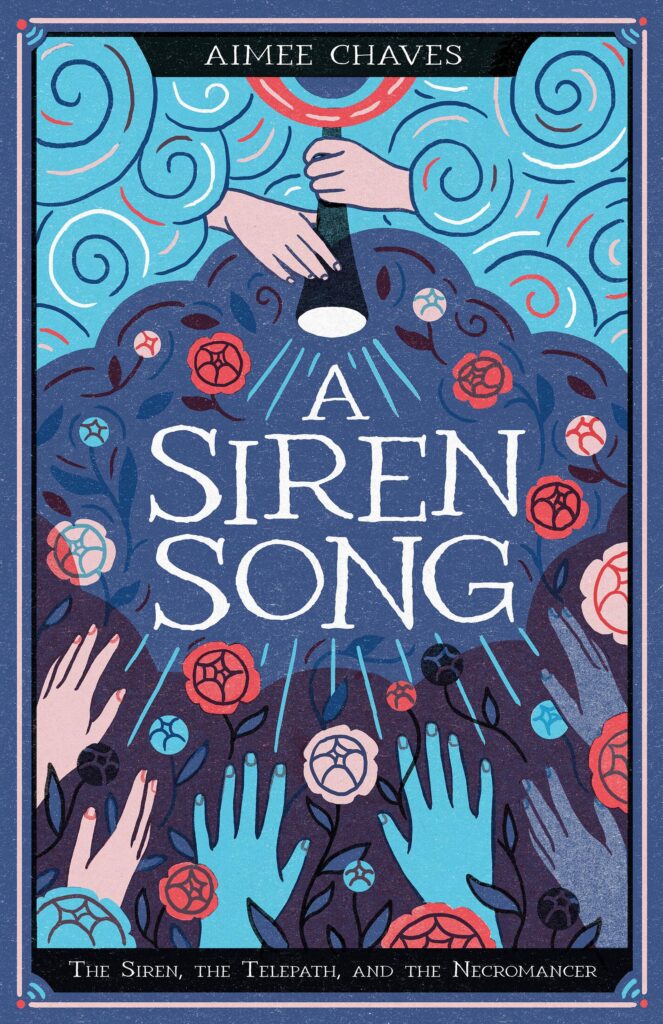
Read A Siren Song Here.
The Siren, gifted with the power to command anyone with a single word, is the cornerstone of the Seers’ devotion. To them, Abel is more than human-a sacred figure to be worshipped and protected. But after the death of their mother, the first Siren, Abel’s once-proud role begins to crumble. Their gift now feels more like a curse, and the weight of expectation threatens to break them.
When the Seers reach their limit with Abel’s growing defiance, they turn to Damien, a drifter with nowhere to go and needing a place to stay, and assign him an impossible task: protect the Siren at all costs. For Damien, it’s a chance to escape the streets. For Abel, it’s an unwelcome intrusion from someone they neither trust nor want in their life.
Abel’s only solace comes from Willow, their best friend and a skilled witch who serves as the community’s healer. Fiercely loyal, Willow does everything she can to support Abel, but even her magic can’t repair the cracks forming in Abel’s spirit.
As Abel struggles to reconcile the Siren’s image with the truth about their mother and the Seers, they begin to uncover the possibility of a life-and a love-beyond the confines of power and worship.